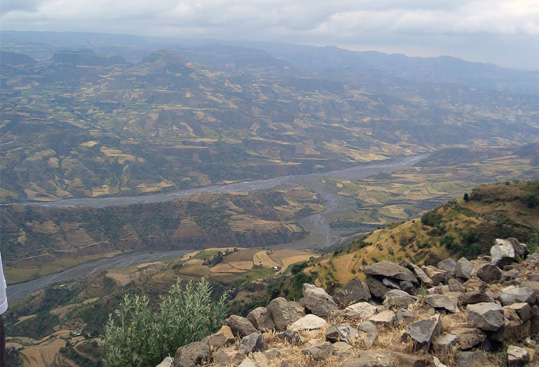
Trips to Cultural Heritage
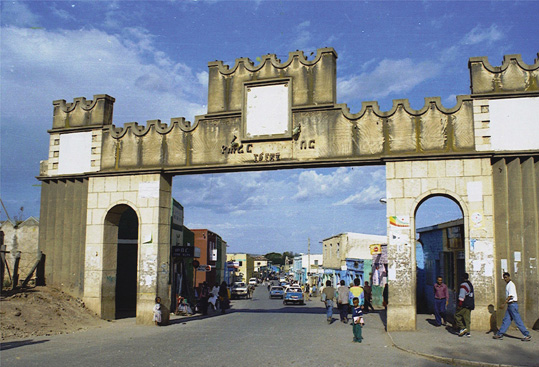
Harar Jugol –
This ancient walled city of labyrinthine alleyways is considered to be the fourth holiest city in Islam (after Mecca, Medina and Jerusalem). Located in the drier and hotter eastern lowlands, Harar is a recipient of a UN City of Peace medal and is known for the history of peaceful relations between Muslims, Christians and the five ethnic groups in the region. Harar grew to prominence as a centre of the coffee trade, its position on key trade routes and came to be known as The City of Saints for its status in Islamic culture in this east African region.
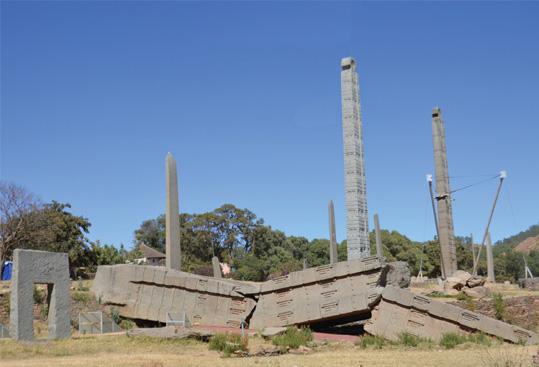
Axum (or Aksum) – northern Ethiopia
The Kingdom of Axum dominated the area between the eastern Roman Empire and ancient India and grew rich and powerful through its control of key trade routes. The city’s ruins – dating between the 1st and 13 century AD include the world’s largest monolithic obelisk known locally as stelae – some of which rise above 23 metres. The Ezana stone with the same message chiseled in 3 ancient languages has an historic and linguistic significance similar to the Rosetta Stone of Egypt. The Ark of the Covenant and the ruins of the palace of the Queen of Sheba are believed to be at Axum.
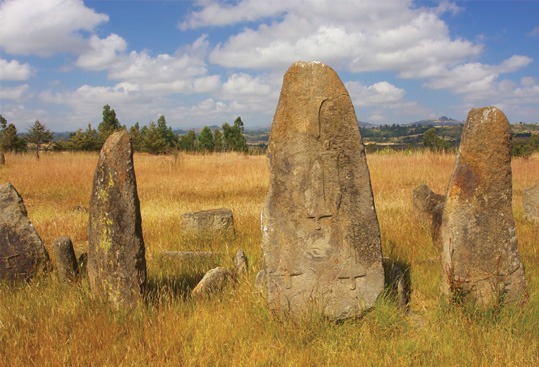
Tiya Stelae Field – Central Ethiopia
The ancient archaeological site of Tiya boasts over 36 monolithic monuments or columns, including 32 carved stelae with symbols chiseled in relief that signify the ancient culture of Ethiopia, the age of which has not yet been completely determined. The identity of the artists/ architects is unknown, but stone stools dated from 250,000 – 280,000 years ago have been found nearby. The stelae are considered to have been built between the 11th and 13th centuries CE.
Simien Mountains National Park – the Roof of Africa
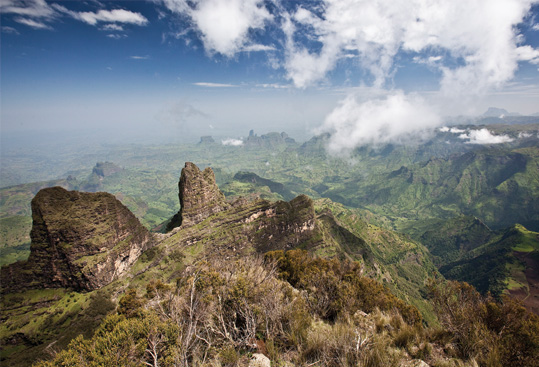
The Simien Mountains National Park is the heart of Africa’s greatest mountainous area. The Simien Mountains were built by eroded volcanic cores from eruptions dated as 75 m years ago. The scenery is breathtaking with an array of rivers, forests and a rich cultural heritage. The Simien Mountains’ highest peak and Africa’s 10th highest, is Ras Dashen at 4,550 m. This region is home to some spectacular endemic mammal species – including the Gelada Baboon, the Walia Ibex, Caracal and the Simien Wolf. The mountains are also populated with large birds of prey such as the Lammergeier with its spectacular 3 m wingspan.
Lower Valley of the Omo River – Ethiopia
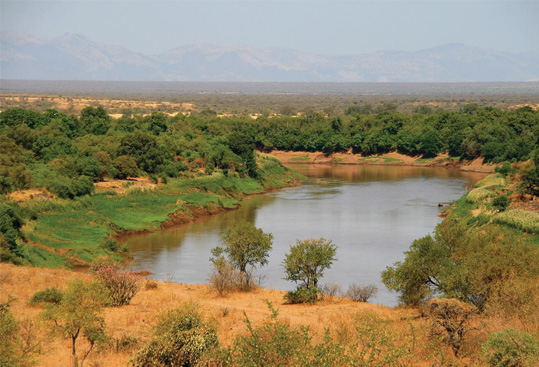
The Omo River is also in the far south of Ethiopia and drains south into Lake Turkana in Kenya. The entire area is important archaeologically and geologically with fossils and tools found at several locations from 2.4 m years ago. The great diversity of peoples and cultures in this region lead many scholars to think it was an ancient crossroads for migrating ethnic groups and cultures.
Awash River – The Birthplace of Humanity
The earliest known remains from the beginning of our species have been found in this region; considered the world’s most early human ancestor, the 3.2-million-year-old ape “Lucy” was the first Australopithecus afarensis (extinct hominin) skeleton ever found though her remains are only about 40 percent complete.The Awash River drains rainfall from the highlands and runs through the homeland of the Afar people into the Afar/ Danakil Desert eventually evaporating in a series of lakes before it reaches the Red Sea coast.